Existing-style customisation
Minimum 80 pairs per style per colour. Mixed sizes have no minimum quantity per size. Confirm the available size range, changes, specifications and production timing before ordering.
Discuss an existing styleDiscuss branding on an existing factory style, or develop women’s shoes from your sample or design reference. Branding methods, packaging, samples and order terms are confirmed after review.
Minimum 80 pairs per style per colour. Mixed sizes have no minimum quantity per size. Confirm the available size range, changes, specifications and production timing before ordering.
Discuss an existing styleConfirm your sample requirements, sample charges, revision scope and any tooling costs before proceeding. New-design MOQ and timing are quoted after review.
Discuss new development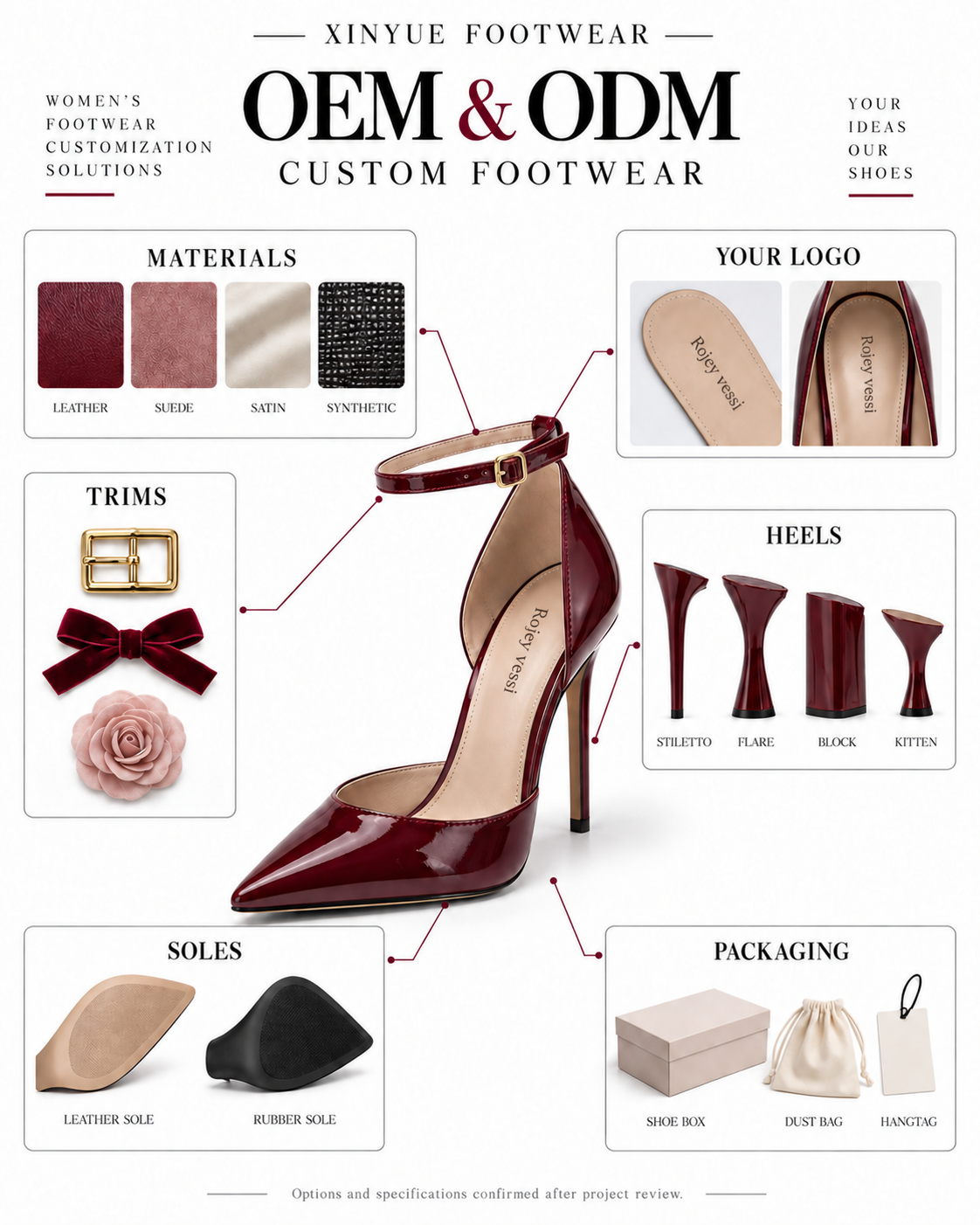
Prepare clear photographs of the upper, sole, heel and inside of your sample. Describe what should stay the same and what you want to change. We confirm feasibility before a sample-development quotation.
Choose a confirmed factory style, or share your sample and development requirements.
Agree colours, size breakdown, materials, pricing and production timing.
Review the sample and agreed specifications before bulk production.
Confirm inspection, packing and shipping arrangements for your destination.
Photos help with the first review. Whether a physical sample, last or additional measurements are needed depends on the design. Confirm this before sending a parcel.
Sample development is quoted after reviewing construction, materials and required changes. Ask for a breakdown of sampling and any tooling charges.
The schedule must be agreed for your order after the sample, materials, specifications and commercial terms are confirmed.
The existing-style customisation minimum is 80 pairs per style per colour, with mixed sizes within the confirmed range. The proposed logo method, artwork, placement and packing still need review. Confirm any separate quantity, sample or cost conditions for branding and packaging in the private-label feasibility brief. A requested change is not an approved production option.
Record the requested change, the factory response, the agreed sample or specification revision, and any quantity, cost or schedule item still to confirm. Mark a pending decision clearly. Ask whether heel, last, material or construction changes require further development before approving the order. Use the sample-feedback record and check the factory identity and verification details when preparing the written agreement.
A last is the three-dimensional form used to shape a shoe. For high heels, the toe shape, fit dimensions and heel pitch need to work with the upper, sole and heel as one system.
Send your reference, size range, quantities, destination and branding brief. We will review the project scope before confirming samples, costs and scheduling.
Discuss your projectShare a reference shoe or design, toe shape, intended heel height, size range and target customer. Include fit feedback or measurements where available.
Discuss whether a suitable existing last can be used, adjusted or developed anew. Confirm development scope and any specialist tooling requirements.
Review heel pitch, toe allowance, forefoot width and component compatibility together. A different heel height may require a different last or further development.
Evaluate a trial shoe using the intended materials. Check toe room, heel hold and walking feedback; the last alone does not determine final fit.
Record agreed adjustments and assess representative sizes before approving the size set. Keep an identified reference sample for comparison.
Confirm last specifications, tooling cost, ownership, storage and repeat-order arrangements in writing. Production starts against the agreed sample and order terms.
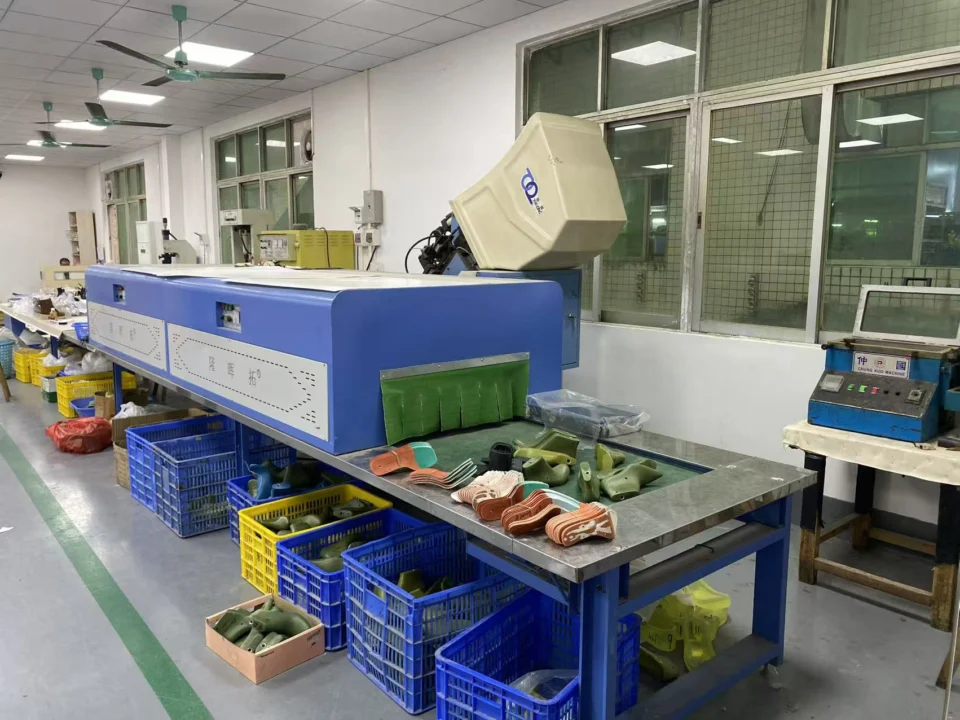
A planning guide: available options, checks, development fees, minimum quantities and timing are agreed for each project. Factory photographs provide context rather than evidence of every stage described.
A branding request and a new shoe design need different reviews. Identify the base style first, then list each requested change. The table is a brief for feasibility review; it does not promise that every branding method or modification is available.
| Requirement | Details to send for review |
|---|---|
| Base shoe | Our factory style code, or your sample/design reference. State whether the shape and construction should stay the same. |
| Brand marking | Your artwork, intended position, dimensions, colour and finish. Ask which application method is feasible and whether it has a separate minimum or charge. |
| Packaging | Requested box, logo placement, size labels and carton markings. Confirm packing specifications, quantities and pricing in the quote. |
| Shoe changes | List material, colour, heel, sole and fit changes separately. Ask whether they remain existing-style customisation or require new development/tooling. |
| Approval reference | Agree which sample and artwork/specification revision will be approved before production, including any changes still awaiting confirmation. |
Existing-style customisation starts at 80 pairs per style per colour, with no minimum per size within the confirmed size range. New-design MOQ, sample charges, tooling and timing are assessed separately. Branding and packing conditions must also be confirmed for the specific order.
Sourcing for the Middle East or North America? Include your destination country and city, quantities by style, colour and size, and any packaging or labelling requirements. Freight, delivery timing and required documents are confirmed in the quotation; they are not included in a product image or MOQ.
Stock order: requirements and stock confirmation → quotation and payment agreement → picking and checks → combined dispatch.
Custom order: requirements → solution and quotation → sample and specification approval → production and inspection → shipping and support.